
Use arrow keys to explore, Shift for larger steps, plus or minus to zoom, and Home to center the axis. Open Events in this period to read event details.
 Battle of Castillon (1453 CE)
 Gutenberg Press (1450 CE)
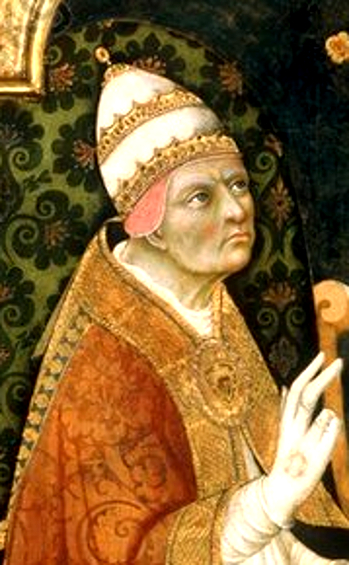 Pope Callixtus III (1455 CE to 1458 CE)
 Pope Nicholas V (1447 CE to 1455 CE)
 Pope Pius II (1458 CE to 1464 CE)
 Wars of the Roses (1455 CE to 1485 CE)
 First Printed Bible (1452 CE)
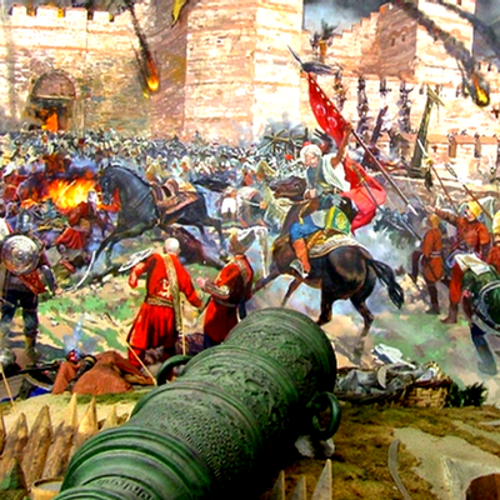 Fall of Constantinople (1453 CE)
The bull Romanus Pontifex confirms Portuguese privileges in African expansion
Detailed modal with historical information, media, references and analysis for the selected timeline event.
- Date
08 Jan 1455 AD
- Category
- Religion
- Classification
- Punctual Event
Description
On 8 January 1455, Pope Nicholas V issued Romanus Pontifex, a papal bull addressed to the Portuguese Crown. It confirmed privileges over territories and trade in expansion along the African coast, naming King Afonso V and Infante Henrique.
The bull restated powers granted in Dum Diversas in 1452, including permission to subjugate groups described as enemies of the Christian faith and to reduce people to perpetual slavery. It also endorsed Portuguese exclusivity in areas and activities covered by the instrument.
The document shows religious authority being used to legitimize monopolies and coercion. It belongs to the legal context that preceded the large-scale Atlantic slave trade, which later supplied the Americas, including Brazil.
Tags
💡 Click a tag to filter the timeline
Explore this event
Sources
Notes
The entry uses 1455, following modern archival dating. The document gives 1454 under the convention that began the year on 25 March. The bull reaffirmed earlier grants, and the trade already existed when it was issued.